How to Incorporate Learning Moments into Aquatic Play
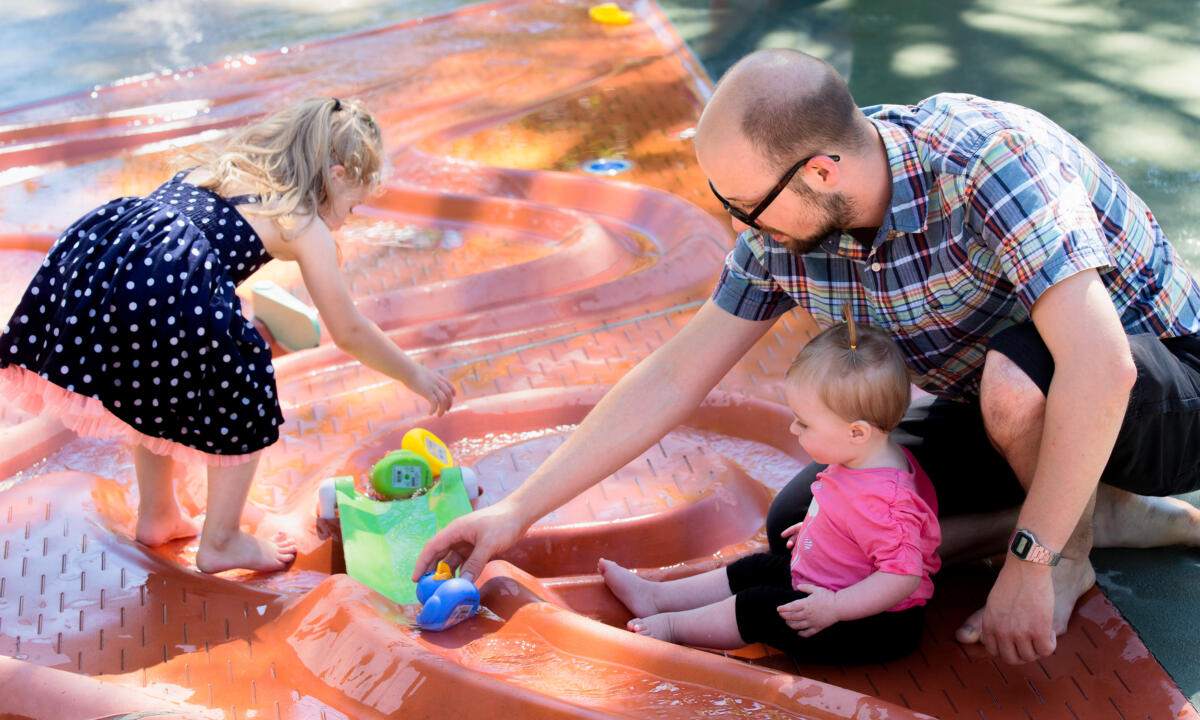
Aquatic play does more than keep children active and cool during warm weather. Every splash, spray, and discovery can become an opportunity to learn.
From developing problem-solving skills to building confidence, creativity, and social connections, water play creates natural learning experiences that support healthy child development while keeping play at the center of the experience.
When thoughtfully designed, Splashpads, interactive water features, and aquatic play environments can support cognitive, physical, social, and emotional development simultaneously. Whether you’re planning a community park, a municipal upgrade, or an early childhood play area, incorporating learning opportunities into aquatic play can create lasting value for children, families, and communities.
Transforming Curiosity into Discovery
Children are naturally drawn to water. Its constantly changing movement encourages exploration, experimentation, and questioning.
Why does the water flow faster here? What happens when I move this gate? How can I change where the water goes?
These simple interactions help develop critical thinking skills long before children encounter these concepts in a classroom. Through observation and experimentation, children begin to understand cause-and-effect relationships while building confidence in their ability to solve problems independently.
Features such as those found in the Explora™ collection encourage inquiry-based learning by allowing children to actively influence water behavior. What appears to be simple play is often a child’s first experience with discovery-driven learning.
Multi-Sensory Play Supports Development
Strong learning environments engage multiple senses simultaneously.
Aquatic play naturally combines movement, sound, touch, temperature, and visual stimulation, creating rich experiences that support cognitive development and sensory processing.
Sensory-rich experiences help children build connections as they explore their environment. Every interaction with water encourages them to observe, react, and adapt.
Aquatic play supports:
- Cognitive development through sensory exploration
- Language development as children describe experiences and discoveries
- Fine and gross motor skill development through movement and interaction
- Sensory processing through varied water effects and textures
Whether children are feeling a cooling mist, listening to flowing water, or watching sunlight reflect across a Splashpad®, they are constantly processing new information and building connections through play.
Learning Through Different Types of Play
Not all learning happens in the same way.
At Vortex, aquatic play environments are intentionally designed around a variety of play experiences that encourage exploration, interaction, and growth. By combining multiple play types within a single environment, aquatic play areas can engage children of different ages, interests, and developmental stages.
Sensory Play
Sensory play experiences stimulate multiple senses simultaneously, including touch, sound, and sight. These interactions help children process information, understand their surroundings, and explore new sensations.
Tactile Play
Tactile experiences encourage children to discover different water textures and sensations through hands-on interaction. These moments are particularly valuable for younger children developing sensory awareness and early learning skills.
Flow Play
Flow experiences allow children to manipulate and redirect water using gates, barriers, and channels. These activities naturally encourage experimentation while introducing concepts related to sequencing, cause and effect, and problem-solving.
Kinetic Play
Kinetic experiences encourage children to interact directly with play features by rotating, spinning, opening, and closing elements. This type of play supports coordination, motor development, and active learning.
Spray Play
Spray experiences are centered around human-to-human interaction. Directed streams of water encourage cooperation, communication, friendly competition, and social learning.
Circuit Play
Circuit experiences use multiple water effects to encourage movement from one activity to another. This promotes physical development, exploration, and active discovery while keeping children engaged for longer periods of time.
Together, these experiences create environments that support growth, imagination, interaction, and memorable learning opportunities through play.
Water Play Naturally Encourages STEM Learning
Children do not need a classroom to begin exploring STEM concepts.
Water naturally encourages experimentation, observation, and problem-solving. As children redirect streams, manipulate gates, compare water flow, or test different pathways, they begin exploring concepts related to science, engineering, and mathematics through direct experience.
Flow-oriented play experiences are especially effective because they encourage children to make predictions, test ideas, observe outcomes, and adapt their approach. These simple interactions help build confidence, curiosity, and critical thinking skills.
The most effective learning experiences happen when children do not realize they are learning at all. Aquatic play creates exactly that opportunity through experiences like Water Journey™.
Building Social and Emotional Skills
Some of the most important learning moments happen through interactions with others.
Aquatic play spaces naturally encourage children to communicate, collaborate, negotiate, and share. Whether waiting for a turn at a water feature, working together to redirect water flow, or participating in group play activities, children practice valuable social and emotional skills.
Inclusive aquatic play environments also help foster empathy and understanding by creating opportunities for children of different ages and abilities to play together.
These experiences help develop:
- Communication skills
- Cooperation and teamwork
- Patience and self-regulation
- Empathy and inclusion
- Leadership and confidence
These social and emotional competencies play a critical role in long-term success both inside and outside the classroom.
Encouraging Open-Ended Play
Not every learning experience needs a predefined outcome.
Open-ended play allows children to explore, imagine, and create without being directed toward a specific goal. This type of play encourages creativity, independence, and flexible thinking.
Features such as Sea Silhouette™ and Watergarden™ invite children to invent their own stories, scenarios, and adventures.
A stream may become a jungle river.
A spray feature may become a magical portal.
A Splashpad® may transform into an entirely new world imagined by the children playing within it.
Open-ended play helps strengthen:
- Imagination
- Language development
- Storytelling skills
- Executive functioning
- Creative problem-solving
- Adaptability
These skills support learning throughout childhood and beyond.
Why Learning Through Play Matters
Children learn best when they are actively engaged.
Unlike structured activities with predetermined outcomes, play lets children experiment, make decisions, solve problems, and build confidence at their own pace.
Aquatic play is particularly powerful because it combines physical movement, sensory stimulation, social interaction, creativity, and exploration within a single environment.
Rather than separating learning from play, aquatic environments create opportunities where both happen naturally at the same time.
Build with Intention
At Vortex, we believe that play and learning go hand in hand.
Our aquatic play environments are intentionally designed to encourage discovery, movement, imagination, and interaction while maintaining the highest standards of safety, accessibility, and community value.
Whether you’re creating a neighborhood Splashpad®, a Playable Fountain™, or a large-scale aquatic play destination, thoughtful design can transform every splash into an opportunity for meaningful learning.
Explore our aquatic play solutions and discover how your next project can support child development through play.
Designing with Purpose: Tips for Implementation
To maximize learning potential within an aquatic play environment, consider the following strategies:
- Incorporate a variety of water effects, including mist, streams, sprays, and interactive elements.
- Include multiple play experiences that encourage sensory, tactile, kinetic, and social interaction.
- Design spaces for different age groups and developmental stages.
- Create opportunities for collaboration as well as independent exploration.
- Utilize durable, tactile materials that encourage hands-on engagement.
- Provide shaded gathering areas where families can connect and discuss discoveries.
- Consider programmable systems such as MaestroPro™ that introduce surprise, anticipation, and interactive water sequences.
Thoughtful planning helps ensure aquatic play environments support the whole child—physically, cognitively, socially, and emotionally.
From Splash to Success
Every splash has the potential to spark curiosity.
Every interaction can build confidence.
Every discovery can become a learning moment.
By designing aquatic play environments that encourage exploration, creativity, movement, and connection, communities can create destinations where children are free to learn exactly as they should: through play.
At Vortex, we believe learning happens naturally when children are engaged, active, and curious. By combining sensory, tactile, flow, kinetic, spray, circuit, and social play experiences within a single aquatic environment, communities can create spaces that support childhood development while delivering unforgettable family experiences.
The best learning experiences do not always happen in a classroom.
Sometimes, they happen in a Splashpad®.